
What comes into mind when you think of the word ‘sourdough’? Probably fancy brunches, smashed avocado, £6 for a loaf of bread. Sourdough bread is increasingly popular at the moment, fuelled by a love of brunch, a move towards what I would call ‘artisanry’ and a desire for ‘clean’ or ‘healthy’ food (I would like to write more in detail about this trend and actually research it at some point, but right now I want to show you pictures of bread I have baked!). Places like Gail’s Bakery and Brick House have popularised this style of bread, as have beautiful bread Instagrams. It’s not unusual to see piles of loaves artistically stacked in cafes, bakeries and markets alike.
I find this posh, artisanal stereotype of sourdough, or any bread for that matter, amusing because bread is one of the simplest things to make. At the most base level, it takes 4 ingredients: flour, water, salt, raising agent. In normal bread, the raising agent is yeast, and in sourdough bread this is your ‘starter’. I grew up eating home-cooked bread from a bread machine, and rarely eating ‘plastic’ bread from supermarkets. We only ever baked yeasted breads, so my first experience with sourdough bread must have been at one of those fancy cafes I was talking about. I love the crustiness, the crumbs that flake off it, the irregular innards and the slight tang that you get from a slice of sourdough. I knew it was easy to bake your own bread, but it was only this year that I decided to give it a go with sourdough.
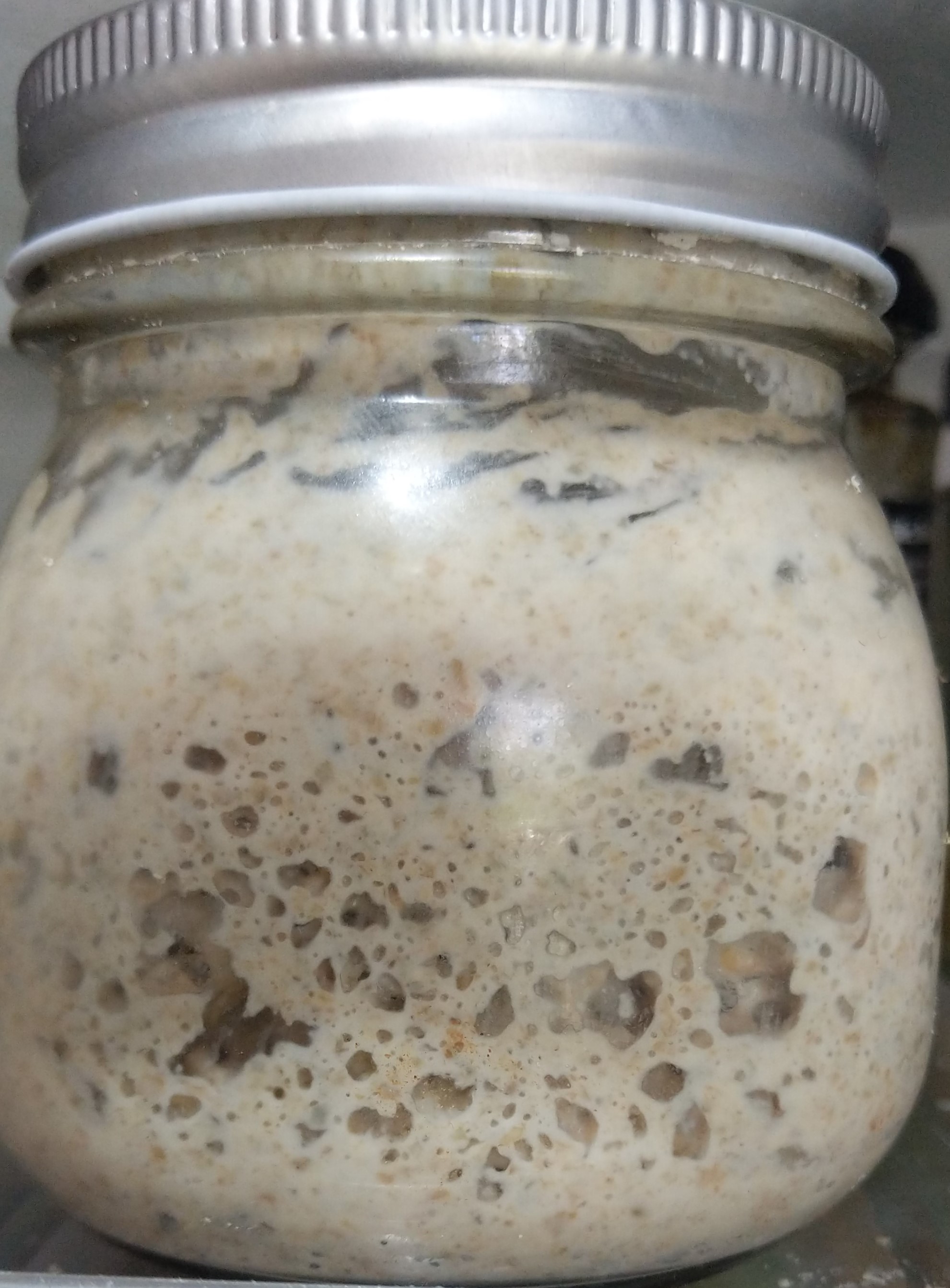
The process of creating a sourdough starter is the first step to having sourdough bread. I think of my starter(s) (I now have two. Their names are Rye-ley and Georgina. Yes, this is extra.) as very low maintenance pets who live in my fridge. They are simply flour and water mixed together in a 1:1 ratio populated by the yeasts that live in the flour you use. The yeasts eat the flour over time, multiply, and emit gases as they consume the flour, so you have to feed them semi-frequently so they have something to eat. I’ll go into a guide on how to make your starter in a different post. You take a portion of the starter you have each time you bake and use that in the bread mixture.
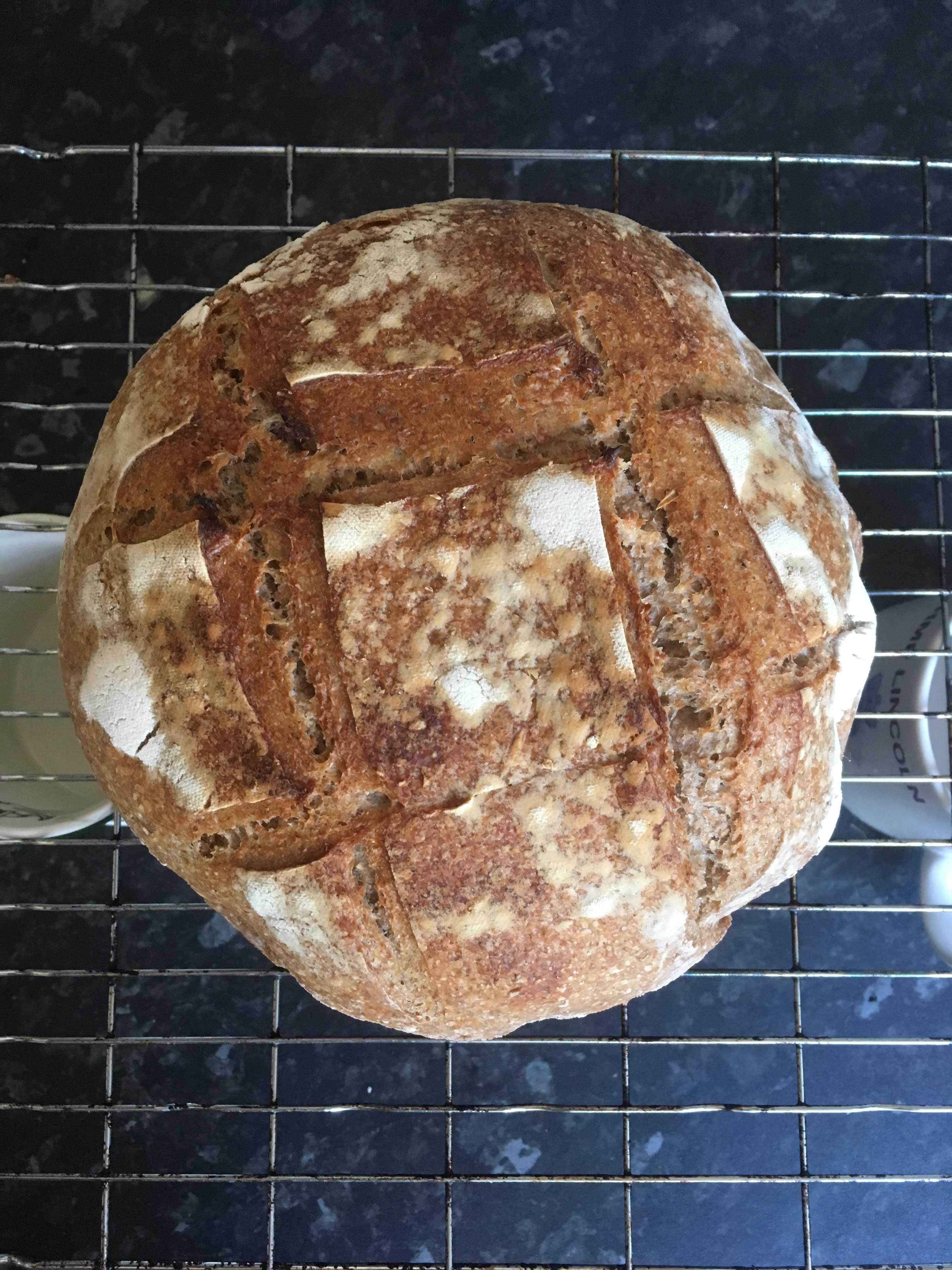
Looked good from the top! 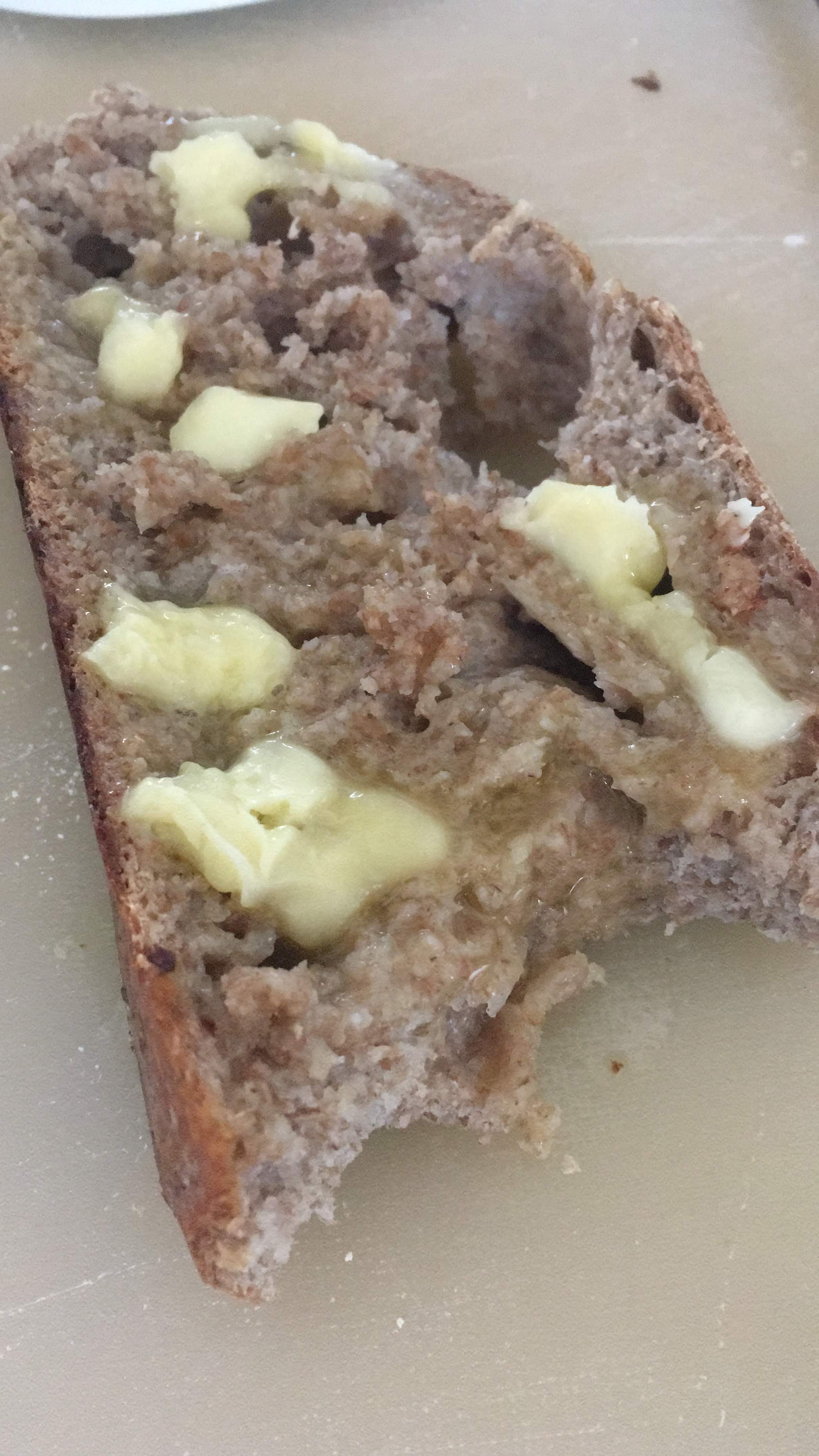
The first bite from my first sourdough loaf…tasted amazing 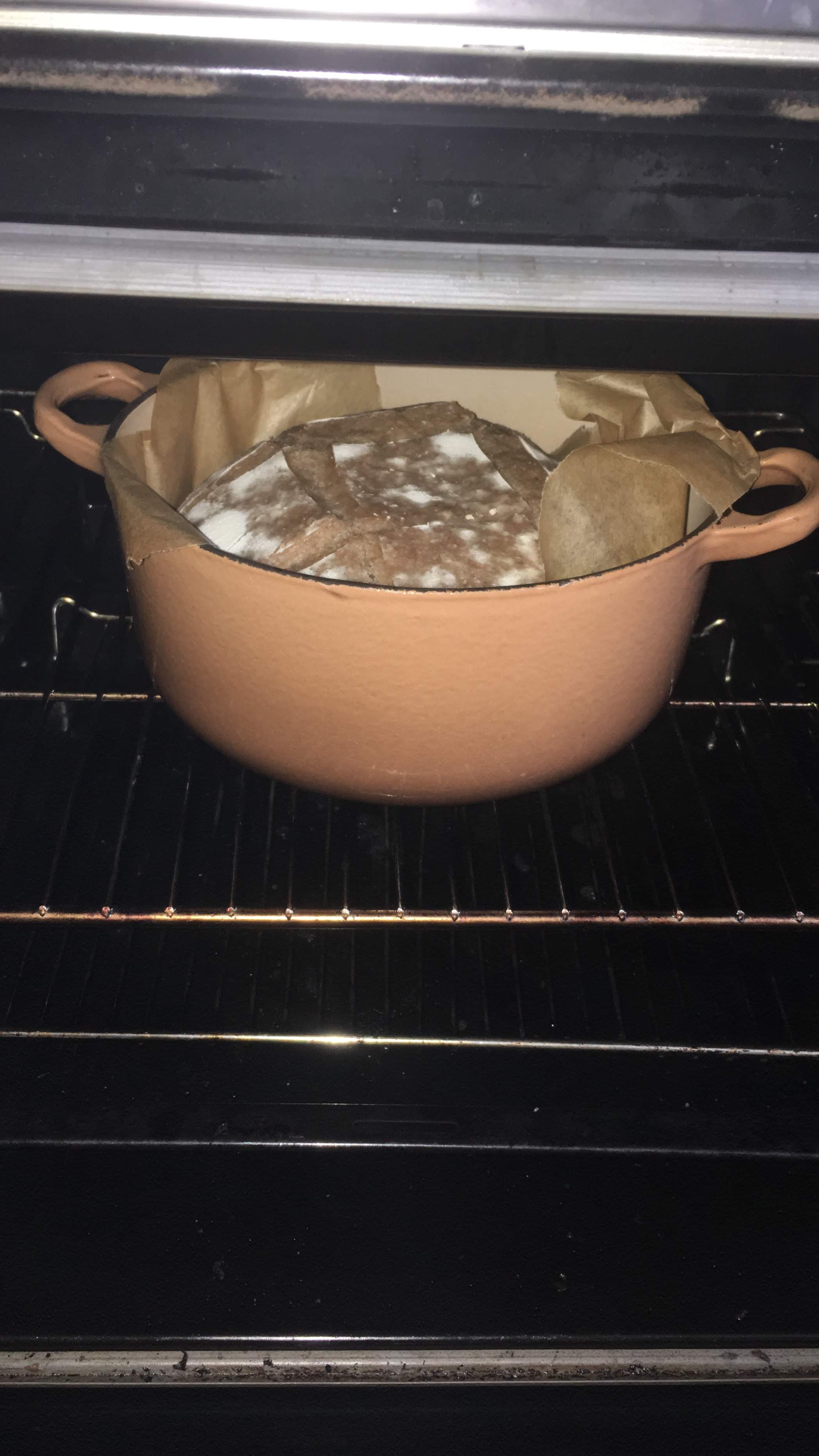
Although it looked pretty, I underbaked a little, and it didn’t rise very much
Sourdough bread is quite involved, and it takes a bit of time to get it right. Often it takes two or three days from starting the recipe to having a finished loaf, and all sorts of factors can influence the outcome of the bread. How happy your starter is, what flour you use, how much water you add, how long and how warm you prove the dough for, how you shape and score the bread, and so many more variables need to be taken into account. For a lover of baking like me this is so much fun. Over time I am getting to know my starters, and learning what influences what in the bread. The first few loaves weren’t disasters, but I had so much I wanted to change and improve on every time I baked. Now I know that Ryeley is a pretty happy starter and munches away at flour nicely even when neglected, whereas Georgina is a bit of a fussy child and gets grumpy without her regular feed. I know that I need to flour teatowels GENEROUSLY otherwise stickages occur. I know a little more about how to tell when a dough has developed enough gluten and whether it has proved enough. And oh boy I am only just getting started in the art of scoring the loaves to make pretty designs on top. At this point I have tried out three or four recipes, as well as altering things myself to try and get it right. And since I’ve started playing with sourdough it’s gone from winter to summer, which affects everything all over again!
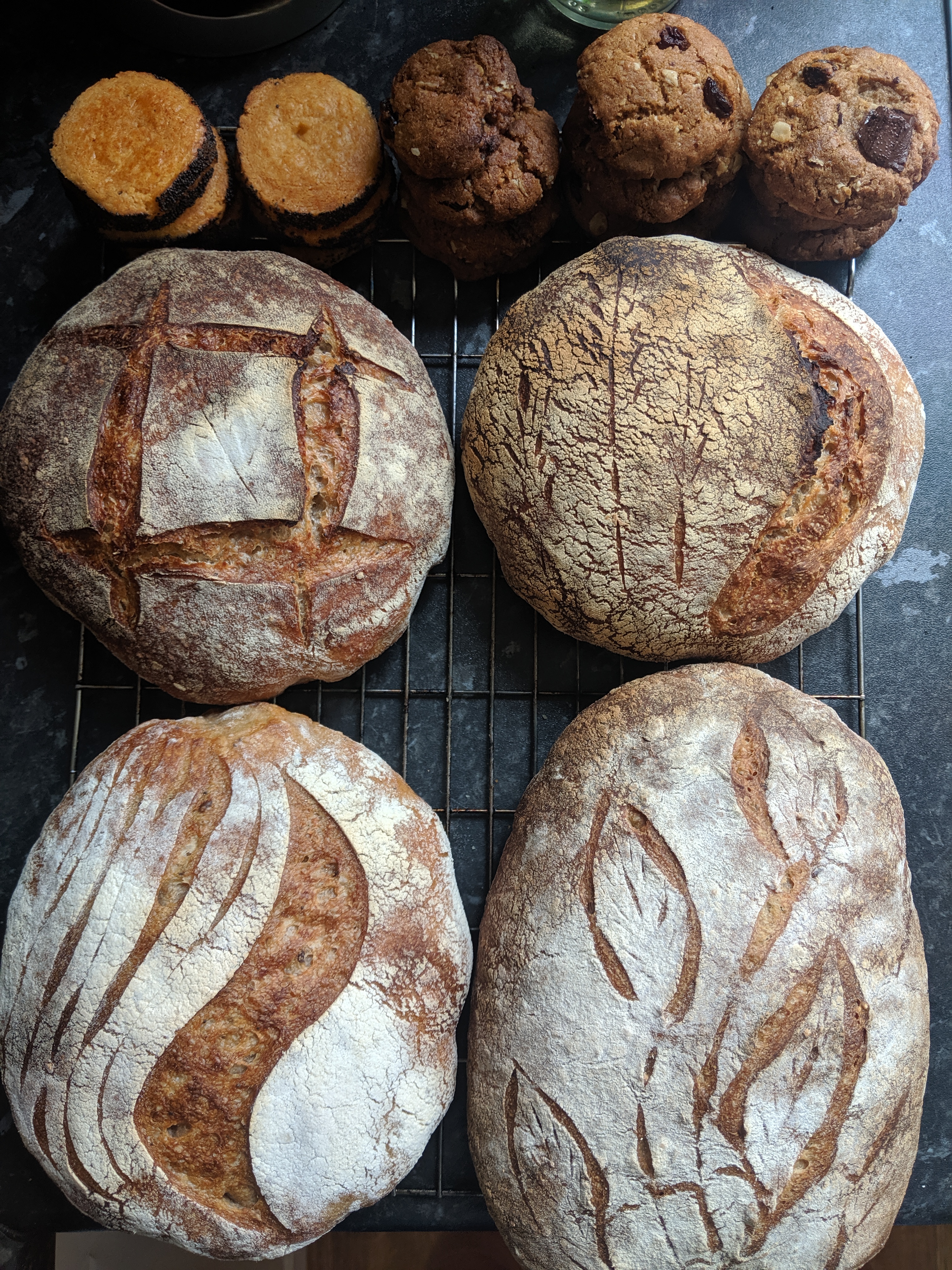
Four of my most recent loaves! Which design is your favourite? 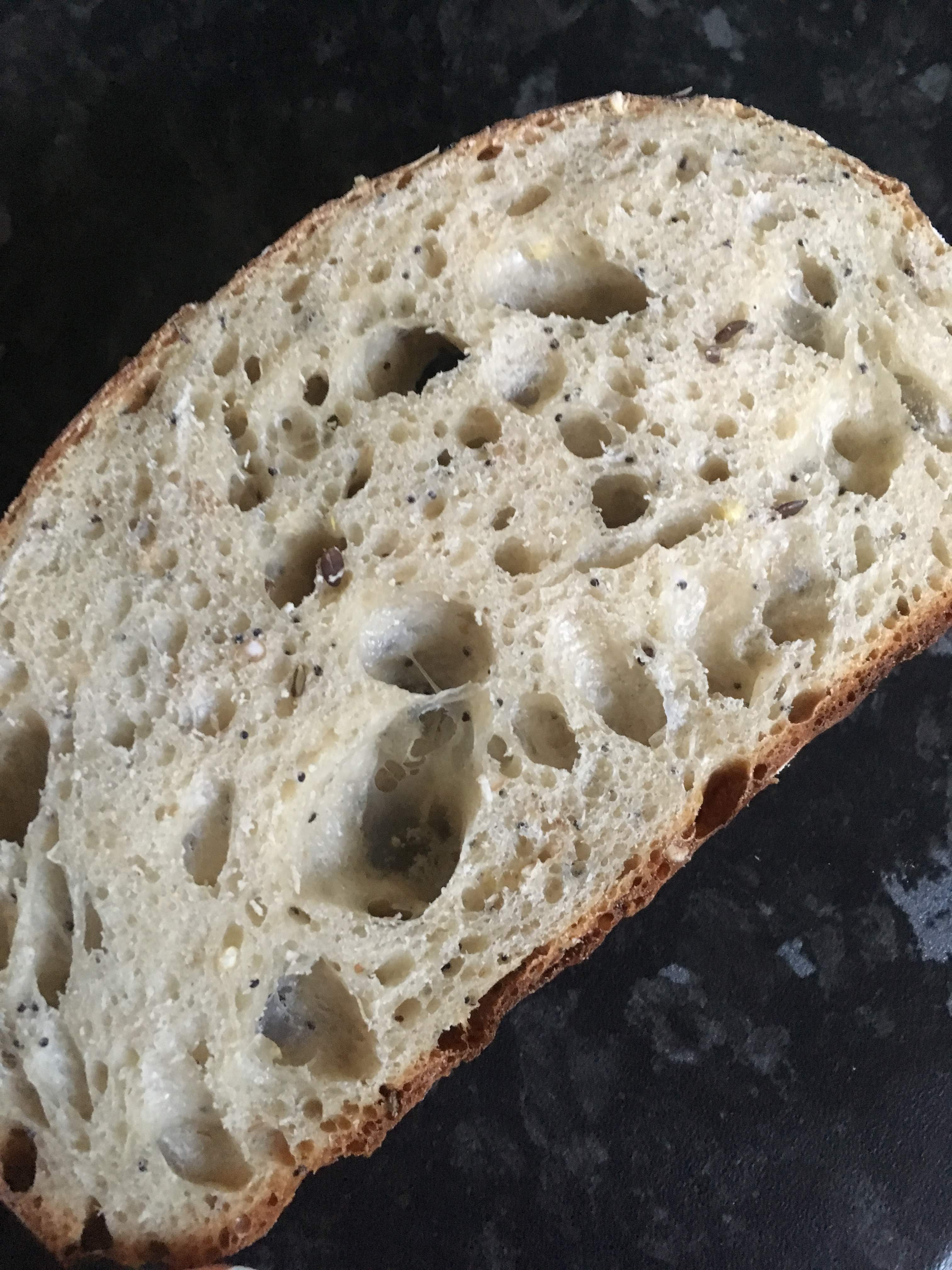
Crumb shot! Aiming for irregular, but not so much that all your innards fall out when you use it for a sandwich
I haven’t bought bread since February, and I am hoping to keep this up. I think that as well as being tastier than store bought bread, I am saving money. The only cost of these loaves is the flour I buy to bake with. Each loaf is maybe 250g flour, which works out as 50p per loaf if I were to use the fanciest flour possible (yes I went to Waitrose and bought a bag of flour that cost £3), and much less with other flours.
Bread isn’t the only thing that uses sourdough starter. Anything that uses yeast you can theoretically replace the yeast with starter, adjusting recipes for moisture and rising time. So far I have also tried sourdough pancakes, and baking an incredible banana bread with sourdough in the mixture. In general, this sort of sourdough baking simply adds a more savoury or tangy flavour to your recipe. Charlotte has made crumpets with her starter and says they are delicious. My next goal is to make some sourdough pizza, trying to compete with Franco Manca in deliciousness. Maybe I’ll have to buy a pizza oven…

 allthegoodstuff.food.blog
My starter is named Philipe. lol
LikeLike